


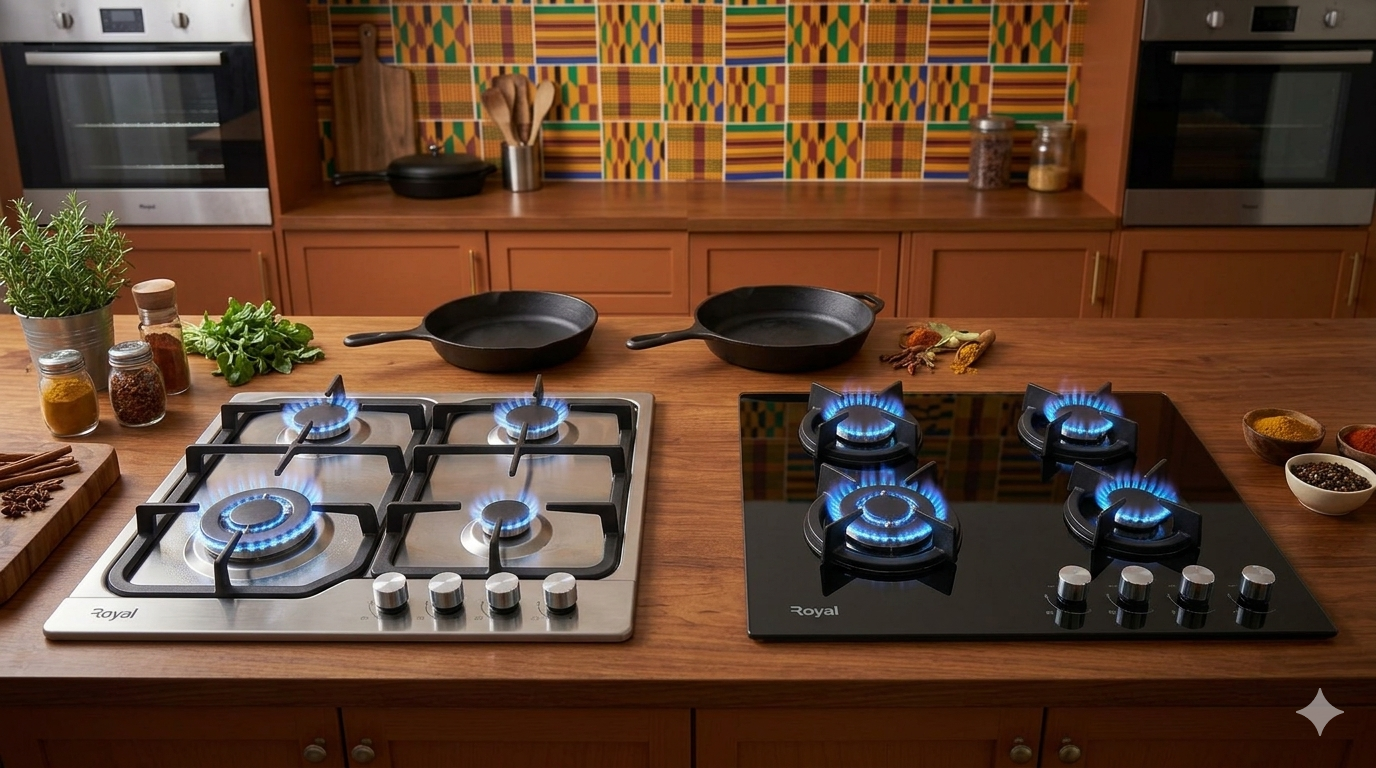
Not sure whether to go for a steel top or glass top gas hob? Here’s a practical breakdown to help Nigerian households make the right kitchen choice.
Choosing a gas hob sounds straightforward until you’re standing in a store trying to decide between a sleek glass surface and a sturdy steel one. Both look good on paper, but they perform differently depending on how you cook, how often you cook, and what your kitchen can handle.
This guide breaks it all down — no jargon, no fluff — so you can walk away with the right answer for your home.
What’s the Actual Difference?
The main distinction is the surface material sitting on top of the hob body.
A stainless steel gas hob has a metal cooking surface, usually with cast iron pan supports and visible burner heads. It’s the more traditional design and has been a fixture in most kitchens for decades.
A tempered glass gas hob features a flat, smooth glass surface — typically black — with the burners fitted into it. The look is modern and minimal. When clean, it can genuinely transform the appearance of a kitchen counter.
Both types use the same gas burner technology underneath. The difference is entirely about surface material, aesthetics, and how they hold up over time.
Cooking Performance: Is There a Real Difference?
In terms of raw heat output, neither type has a clear edge over the other. A well-made steel top or glass top hob will distribute heat to your pot at the same rate if the burner specification is the same.
That said, a few practical differences show up during everyday cooking.
With a steel top hob, the raised pan supports give your cookware a very stable base. If you use heavy-bottomed pots, this added stability is useful, especially on a busy stove with multiple pots on the go.
Glass top hobs tend to sit flatter, which suits lighter cookware well. The surface can also feel more responsive when adjusting burner height because you’re working closer to the flame visually.
Cleaning and Maintenance
This is where the two types part ways most clearly.
Glass top hobs are easier to wipe down after cooking. Spills sit on the flat surface and don’t run into crevices. A damp cloth handles most everyday messes, and the hob looks almost new again with minimal effort. For anyone who cooks heavily spiced stews or soups — which tend to bubble and splatter — this quick clean-up is a real practical advantage.
The catch is that glass requires careful handling. Dropping a heavy pot or placing cookware down too forcefully can crack the surface. Tempered glass is strong, but it’s not indestructible.
Stainless steel hobs are more forgiving physically. You can be rough with them without worry. However, cleaning takes more effort. The area around the burner heads, the grooves in the pan supports, and the space beneath the grates all collect grease and food debris. A thorough clean, takes longer, especially after a big cooking session.
Durability
Multi-pot meals, long simmering times, and daily use are the norm rather than the exception in most kitchens — and any appliance has to hold up to that.
Steel top hobs generally have a longer track record in this environment. The surface resists impact, doesn’t react to sudden temperature changes, and the individual components (burner caps, pan supports) can often be replaced if damaged without replacing the whole unit.
Glass top hobs have improved significantly in terms of build quality. Modern tempered glass is rated to handle substantial heat and weight. The concern isn’t really heat resistance — it’s physical impact from heavy cookware or accidental drops.
If your household is particularly high-traffic in the kitchen, or if young children are often around the cooking area, a steel top offers more peace of mind.
Aesthetics and Kitchen Fit
Glass top hobs win here without much debate. The flat, black surface has a clean, modern look that pairs well with contemporary kitchen style. Many homeowners renovating their kitchens specifically opt for a glass hob because of how it elevates the overall look of the space.
Steel hobs have their own appeal — they look professional and solid, and they age well. But they’re the more traditional choice aesthetically.
If your kitchen is already styled in a modern direction, a glass top hob will feel like the natural fit. If the kitchen is more functional than decorative, steel is perfectly at home.
Price and Value
Steel top hobs are the more affordable option. They’re widely available, parts are accessible, and repair costs tend to be lower.
Glass top hobs typically come at a slightly higher price point, partly because of the materials and partly because of their look. Over time, though, the ease of cleaning and the aesthetic longevity can make the higher upfront cost worthwhile.
The right value calculation depends on how long you plan to keep the appliance and how much daily convenience matters to you.
Find the Right Gas Hob for Your Home
Both steel top and glass top gas hobs have their strengths — it really comes down to your cooking style, kitchen setup, and how much day-to-day maintenance you want to deal with. Heavy daily cooking with large pots? Steel gives you the durability and stability you need. A cleaner aesthetic with moderate cooking demands? Glass is the smarter pick.
Royal Electronics stocks a range of gas hobs built for the demands of Nigerian homes, backed by solid warranty terms and lasting build quality. Visit any leading electronics store near you or browse our collection here to find the right fit for your kitchen.
