


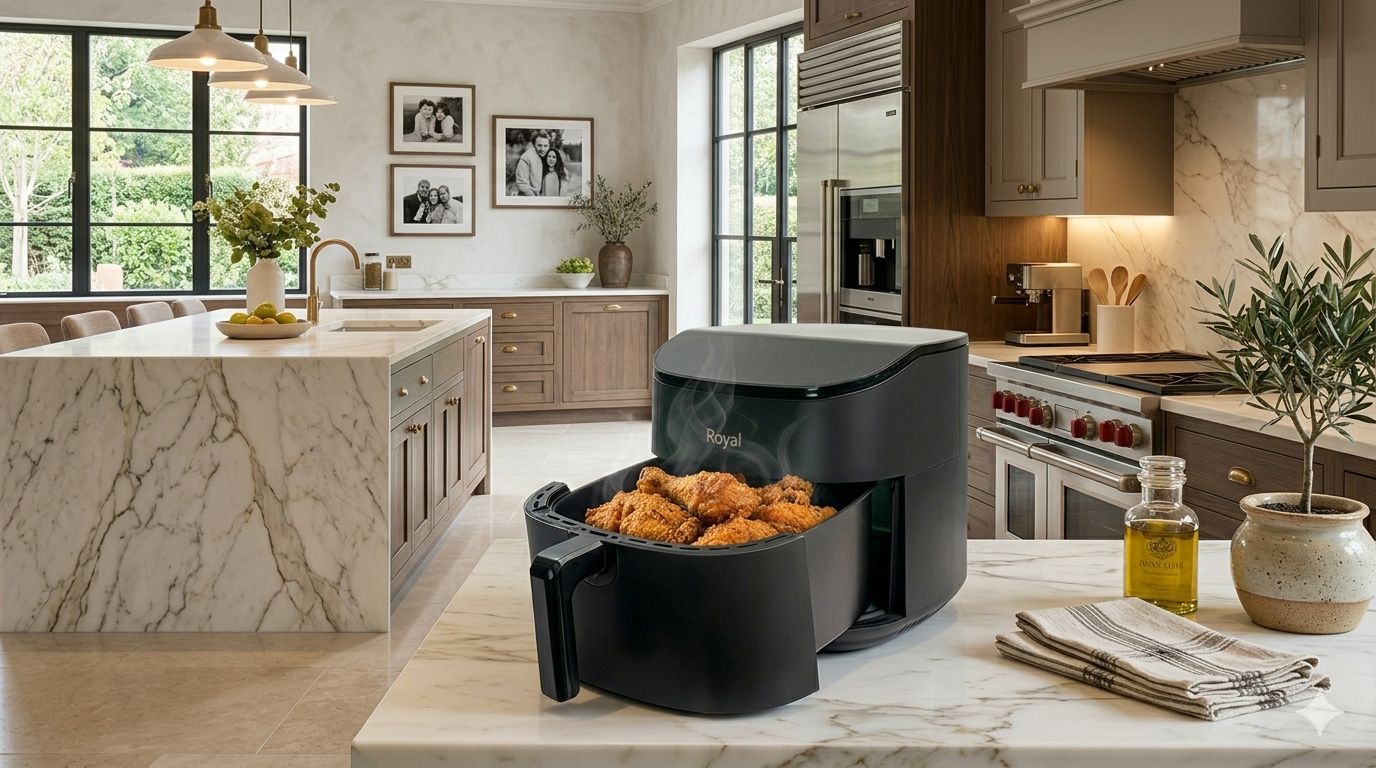
Air fryers have become one of the most talked-about kitchen appliances in many homes over the past few years — and with good reason. They promise crispier food, less oil, and faster cooking times. But alongside the enthusiasm come plenty of genuine questions, especially from first-time buyers.
This FAQ covers the most common ones, so you can make an informed decision before spending your money.
How Does an Air Fryer Actually Work?
An air fryer is a compact convection oven. It circulates hot air at high speed around the food, cooking it evenly and creating a crispy outer layer — similar to what deep frying does, but without submerging the food in oil.
The rapid air circulation is the key. It mimics the effect of frying by producing the Maillard reaction (the process that browns food and creates that satisfying crunch), using only a fraction of the oil a traditional fryer would need.
So no, it doesn’t actually “fry” in the traditional sense — but the results are close enough that most people don’t miss the extra oil.
Is an Air Fryer Healthier Than a Deep Fryer?
Generally, yes. Because you’re using significantly less oil — sometimes just a light spray — the calorie content of air-fried food is lower than the deep-fried equivalent. Research published by the journal Food Science and Nutrition found that air frying can reduce fat content in fried foods by up to 75% compared to conventional frying methods.
That said, it’s not a magic health switch. If you’re loading the basket with processed or heavily seasoned foods every day, an air fryer won’t undo that. It simply removes excess oil from the equation, which is a meaningful difference for everyday cooking.
For families trying to cut down on oil consumption without giving up fried plantain, chicken, or chips, it’s a practical step in the right direction.
What Can You Cook in an Air Fryer?
More than most people expect. The common ones — chips, chicken wings, spring rolls, puff puff — are just the beginning. Here’s a broader picture of what works well:
- Proteins: Chicken (whole pieces or strips), fish, sausages, suya-style skewers
- Vegetables: Peppers, broccoli, sweet potatoes, plantain
- Snacks: Puff puff, samosas, chin chin, egg rolls
- Reheating: Leftover rice (wrapped in foil), pizza, fried food that’s gone soggy
- Baking: Muffins, small cakes, and even bread rolls with the right settings
The one category where air fryers fall short is anything with a very wet batter — like a heavily coated beer-battered fish. The batter tends to drip before it sets, which creates a mess rather than a crust. For those, a traditional approach still works better.
What Size Air Fryer Do I Need?
This depends on your household size:
- 1–2 people: A 2–3 litre capacity is sufficient for daily use
- 3–4 people: Go for 4–5 litres — it handles a full meal comfortably
- 5 or more: A 6–7 litre or dual-basket model saves you from cooking in multiple batches
It’s worth erring on the slightly larger side if you can. Overcrowding the basket is the most common mistake with air fryers — food cooks unevenly when there’s not enough space for air to circulate properly. A bigger basket gives you more flexibility.
Air Fryer vs Deep Fryer: Which Is Better?
They serve different purposes, so “better” depends on what you need.
A deep fryer produces results that are difficult to replicate — particularly for things like heavily battered fish, doughnuts, or traditional bean cakes (akara). The oil immersion creates a texture and consistency that air frying can’t fully match.
However, for most everyday cooking, an air fryer is more practical. It’s easier to clean, safer to use around children, and doesn’t require litres of oil that need disposing of afterward. Running costs are also lower over time.
For the average Nigerian household cooking daily meals, an air fryer handles the bulk of frying needs without the mess or cost of a deep fryer.
How Do I Know Which Is the Best Air Fryer to Buy?
The best air fryer for your kitchen depends on three things: capacity, wattage, and build quality.
Capacity
As covered above, match the size to your household. Buying too small means constant batches; too large and you’re wasting energy on a half-empty basket.
Wattage
Higher wattage (1100W–2000W is typical for home models) means faster preheating and more consistent cooking temperatures. For many homes managing electricity costs, look for models with precise temperature controls so you’re not running the appliance longer than necessary.
Build Quality and Warranty
This is where brand reputation counts. A poorly built air fryer may work fine for a few months before the basket coating chips or the heating element weakens. At Royal Electronics, the air fryer range is selected for durability — and each unit comes with a manufacturer’s warranty, which gives you genuine protection if something goes wrong.
Paying slightly more for a reliable brand with proper warranty cover is always worth it in the long run.
Do Air Fryers Use a Lot of Electricity?
Compared to an oven, no. Most home air fryers run between 1000W and 2000W but cook food significantly faster than a conventional oven, which means total energy consumption per meal is often lower.
A typical air fryer session — say, cooking chicken pieces — takes 20 to 25 minutes. An oven doing the same job might take 45 minutes or more. Over time, that difference adds up, particularly in households where energy costs are a real consideration.
Make the Right Choice for Your Kitchen
An air fryer is one of those appliances that earns its counter space quickly — especially once you start using it regularly. The key is choosing the right size and a brand you can trust, so it holds up to daily use over the long term.
Royal Electronics stocks a reliable selection of air fryers suited to different household sizes and budgets, each backed by warranty support. If you’re ready to find the right fit, visit any leading electronics store near you or browse the available options online to compare models before you decide.
